Smart Chef Job Portfolio for a Strong Culinary Career
· 4 min read · by the ProFigma team
Knowing how to make a chef portfolio matters because a portfolio shows what a resume cannot: your style, your dishes and the story of your career. This guide covers the sections to include, how to photograph and arrange food, how long the portfolio should be and how to export it for hotel, restaurant and private chef applications. A Figma template is linked below if you prefer not to start from scratch.
Key takeaways
- A chef portfolio supports your resume; it does not replace it.
- Include a profile, experience, training, skills, signature dishes, references and contact details.
- Let a few strong photographs show your style, and keep text short.
- Keep the file small enough to email and compress photos before exporting.
- Update it after every job change and tailor it for each application.
Portfolio vs resume vs CV: which to send when
These three documents are often confused, and the right choice depends on the job and the country.
- Resume: a concise list of your jobs, skills and training, usually one or two pages. Best for fast screening.
- CV: a fuller record of your career. In some regions the word simply means a resume; in others it is longer and more detailed.
- Portfolio: a visual document that shows your food, plating and career story alongside key facts.
Many chefs send a resume with a portfolio as a supporting file. If an employer asks for a specific format, follow that, and use the portfolio when they invite extra material or when you apply directly to a private household, a yacht, a boutique hotel or a restaurant that cares about presentation.
Sections every chef portfolio needs
Keep each section short. A hiring manager should see your level, experience and style within a minute.
1. Profile and contact details
Name, title (for example Sous Chef or Private Chef), city, phone, email and, if relevant, a website or social profile. Add a two or three sentence summary of your cuisine and experience.
2. Work experience
List kitchens, roles and dates in reverse chronological order. Under each, add one or two lines about what you were responsible for: section, covers per service, menu development, team size. Use numbers only when they are accurate.
3. Education, training and certifications
Culinary school, apprenticeships and food safety certificates. Include course names and years.
4. Skills and languages
Cuisines, techniques, menu planning, costing, dietary specialties and languages. For international roles, languages matter, so list them clearly.
5. Signature dishes
Three to six photographs, each with a one-line caption stating the dish and a key ingredient or technique.
6. References
Two or three named references with their permission, or a line saying references are available on request.
Photographing and arranging dishes for a portfolio page
You do not need a studio. Natural light and a clean background go a long way.
- Use daylight. Place the plate near a window and avoid the camera flash, which flattens food.
- Keep the background simple. A plain table, slate or dark cloth keeps attention on the dish.
- Shoot from an angle that suits the dish. Overhead works for flat dishes, and a low angle shows height and layers.
- Be consistent. Use similar lighting, angle and editing across all photos so they look like one body of work.
- Show your own work. Only include dishes you cooked and have permission to photograph.
On the page, give each photo room. A large image with a short caption looks more professional than six small pictures squeezed together.
Tailoring the portfolio for hotels, restaurants and private clients
The same material can be arranged differently for each audience. A hotel or cruise operation wants to see structure: brigade experience, volumes, hygiene certification and languages. Put those first and keep dish photos to a smaller section.
A fine-dining restaurant cares about technique and creativity, so give more room to plated dishes and a short note on your cooking style. A private household or yacht looks for flexibility and discretion: dietary specialties, menu planning, shopping and costing, and references from similar clients.
Spend ten minutes before each application reading the job post, then reorder sections and trim captions to match what they ask for.
Portfolio length and file size for email applications
Most portfolios work well at a few pages, with the key information near the start. A typical flow is one page for profile and contact, one for experience and training, one or two for dishes and one for references.
Large photos can make a PDF too big to email. Before you export, run your pictures through an image compressor for dish photos to cut file size without a visible drop in quality, and aim for a file that attaches easily. If the portfolio is for an online application with a size limit, check the limit first.
Adding a QR code to link to your online menu or website
If you have an online menu, a website or an Instagram page with more dishes, a QR code lets a reader jump there from a printed copy. Create one with a QR code generator for portfolio links, add a short label such as "More of my work" and test it with a phone before you send or print the file.
Always include the plain link as well, since many recruiters read on a computer and cannot scan a code.
Building the portfolio in Figma
Figma works well for portfolios because you control the layout precisely and can duplicate the file for each application. Set up an A4 or letter-sized frame, add a layout grid, define two text styles and place content in auto layout sections. Export the pages as a PDF and check that the text is selectable.
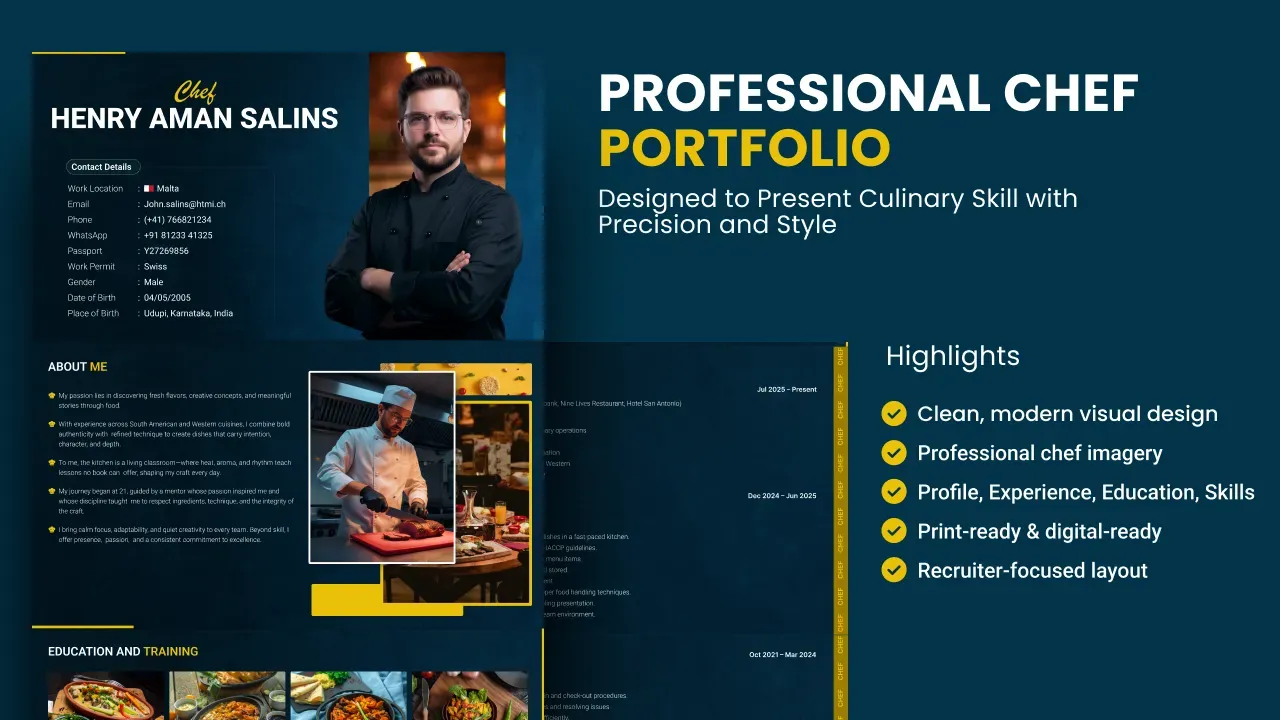
If you would rather start with a finished layout, the personal chef portfolio template for Figma includes profile, about, experience, education, skills and food photography sections in a dark navy and gold design, which you edit with your own details and images.
Common mistakes to avoid
- Too much text. Cut each section to its essentials.
- Weak or inconsistent photos. Fewer strong images beat many mediocre ones.
- Exaggerated titles. Describe your real level and responsibilities. References will be checked.
- Huge file size. Compress images and test the email.
- Out-of-date contact details. Check your phone and email on every update.
- Spelling errors in dish names. Check culinary terms and ingredient spellings carefully.
Conclusion
A good chef portfolio is short, honest and visual. Choose clear sections, show a few dishes you are proud of, compress the file and keep a master version you can tailor for each job. Update it whenever your career or cooking moves forward.
If you want a head start on layout, explore the personal chef portfolio template and adapt it to your own style.
FAQ
What should a chef portfolio include?
A short profile, work experience, education and certifications, skills, photos of signature dishes, references and contact details. Keep each section brief and let the photos show your style.
Is a chef portfolio better than a resume?
They do different jobs. A resume lists facts quickly, while a portfolio shows your food, plating and career story. Many chefs send both, with the portfolio as a supporting document.
How long should a chef portfolio be?
Most portfolios work well at a few pages, with the key information near the start. Keep the PDF small enough to email, and compress large photos before exporting.
Can beginners create a chef portfolio?
Yes. Include training, internships, kitchen skills and photos of dishes you cooked. A clean layout and honest content matter more than a long career history.
How often should I update my portfolio?
Update it whenever you change jobs, learn a new skill or create a dish you are proud of. Keep a master copy and make a tailored version for each application.